
Advanced Search
Advanced Search
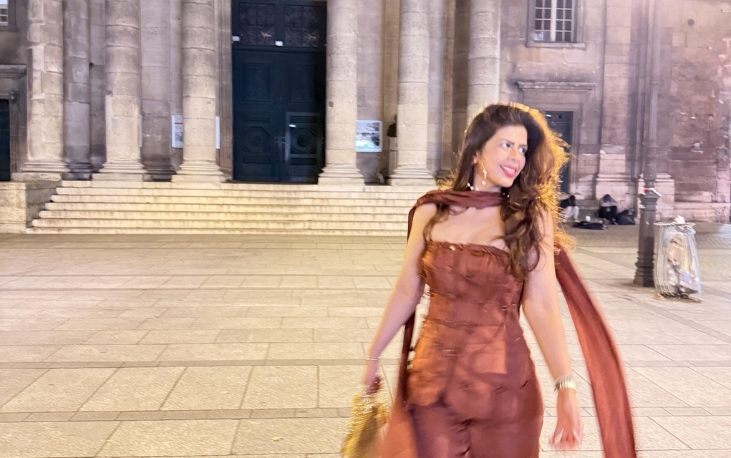
When I packed for Paris Fashion Week Spring/Summer 2026, I didn't reach for the glossy, global, seen-on-the-runway names. Instead, I packed stories. Pieces stitched in Mumbai, woven in Calcutta and Surat, dreamed up in Delhi - each one by an Indian designer shaping a new language of luxury: confident, rooted, and unapologetically homegrown.
Because for me, attending Paris Fashion Week isn't just about witnessing the world's best fashion; it's about carrying a piece of India to those front rows.
As I walked into shows like Maitrepierre, Wildrose & Sparrow, Vaillant, Junko Shimada, and Barbara Bui, surrounded by editors, buyers, and creators from every corner of the globe, I realised something: wearing Indian design abroad isn't just a personal choice. It's a statement. It says - we belong here.
For too long, the world has borrowed our textiles, our silhouettes, our craftsmanship - while we quietly admired from afar. But today, when I wear homegrown labels at a global fashion week, I'm not just wearing a look. I'm reclaiming a narrative.
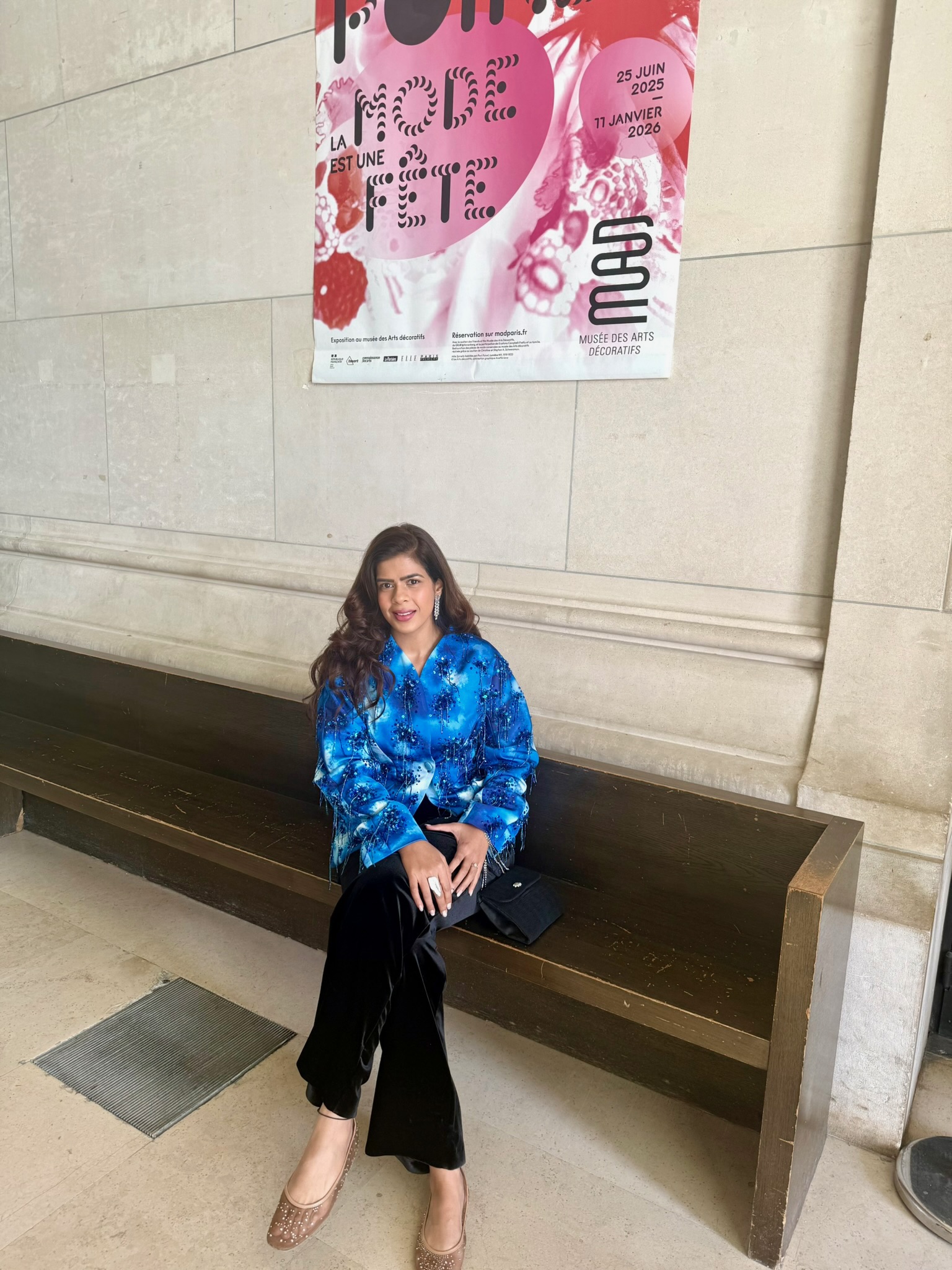
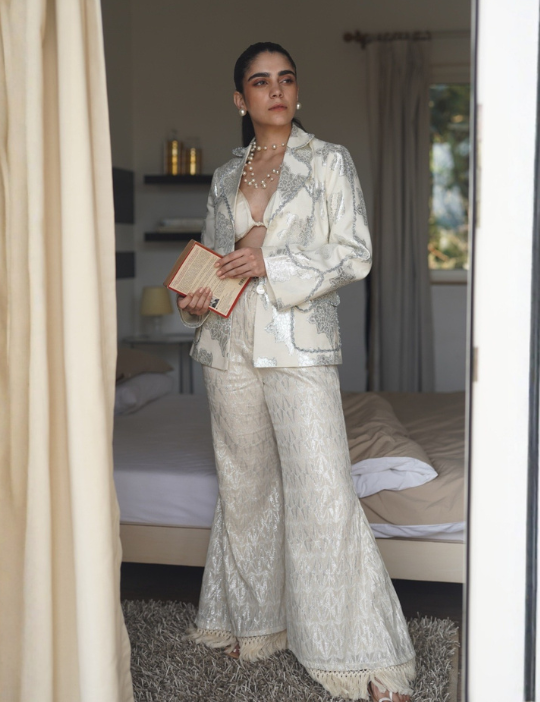
At Maitrepierre, designer Alphonse Maitrepierre presented "En plein cœur" at the Musée des Arts Décoratifs - a poetic homage to Paul Poiret who was known for his voice in opulence. The collection's balance of vintage volume and modern technique - with 3D embroidery, laser-cut embellishments, and a commitment to sustainability - mirrored something deeply familiar: India's own ability to weave the ancient and avant-garde into a single garment. There's a quiet kinship between their reuse of deadstock materials and our revival of craft traditions. Both are acts of remembering and reimagining. I wore a Coral fade Blazer from Siddhant Agarwal with an Italian vintage purse, paired with Maje cascading earrings and an Oak Silver Ring from Studio Kassa.
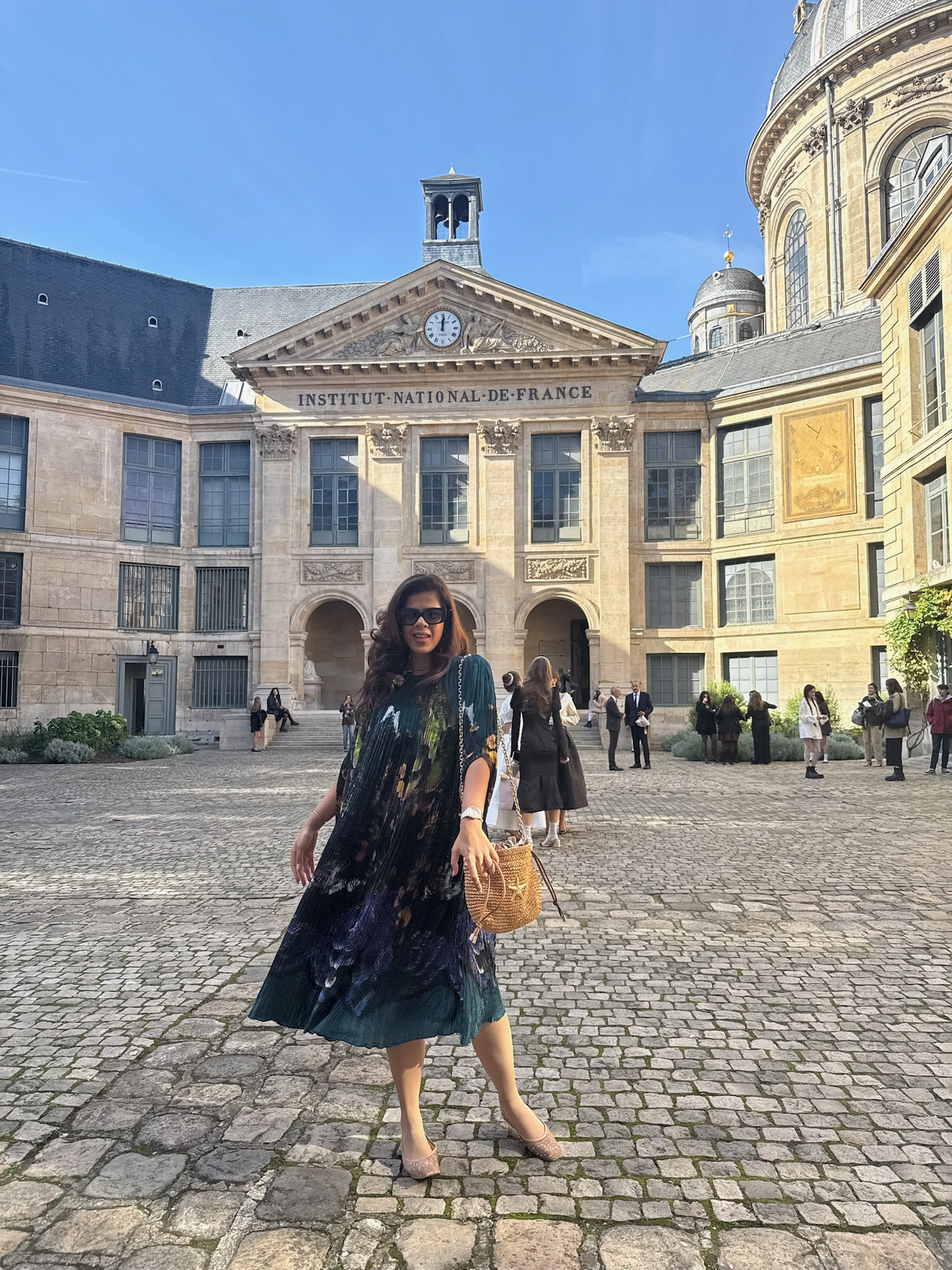
Wildrose & Sparrow's "Ex Libris", staged inside the historic Bibliothèque Mazarine, unfolded like a literary dream, from gothic romance to Edwardian lightness. Each chapter felt handcrafted, deliberate, poetic. It reminded me of India's slow fashion ateliers, where every stitch carries a story and emotion outweighs excess. In a world obsessed with minimalism, their maximalist poetry felt refreshingly honest, much like the way our own artisans approach ornamentation not as decoration, but as devotion. I wore a Bloom Kaftan dress from Amka styled with a vintage grandfather watch (worn as a necklace), paired with vintage earrings from London and a Raffia Bucket Bag from JENA.
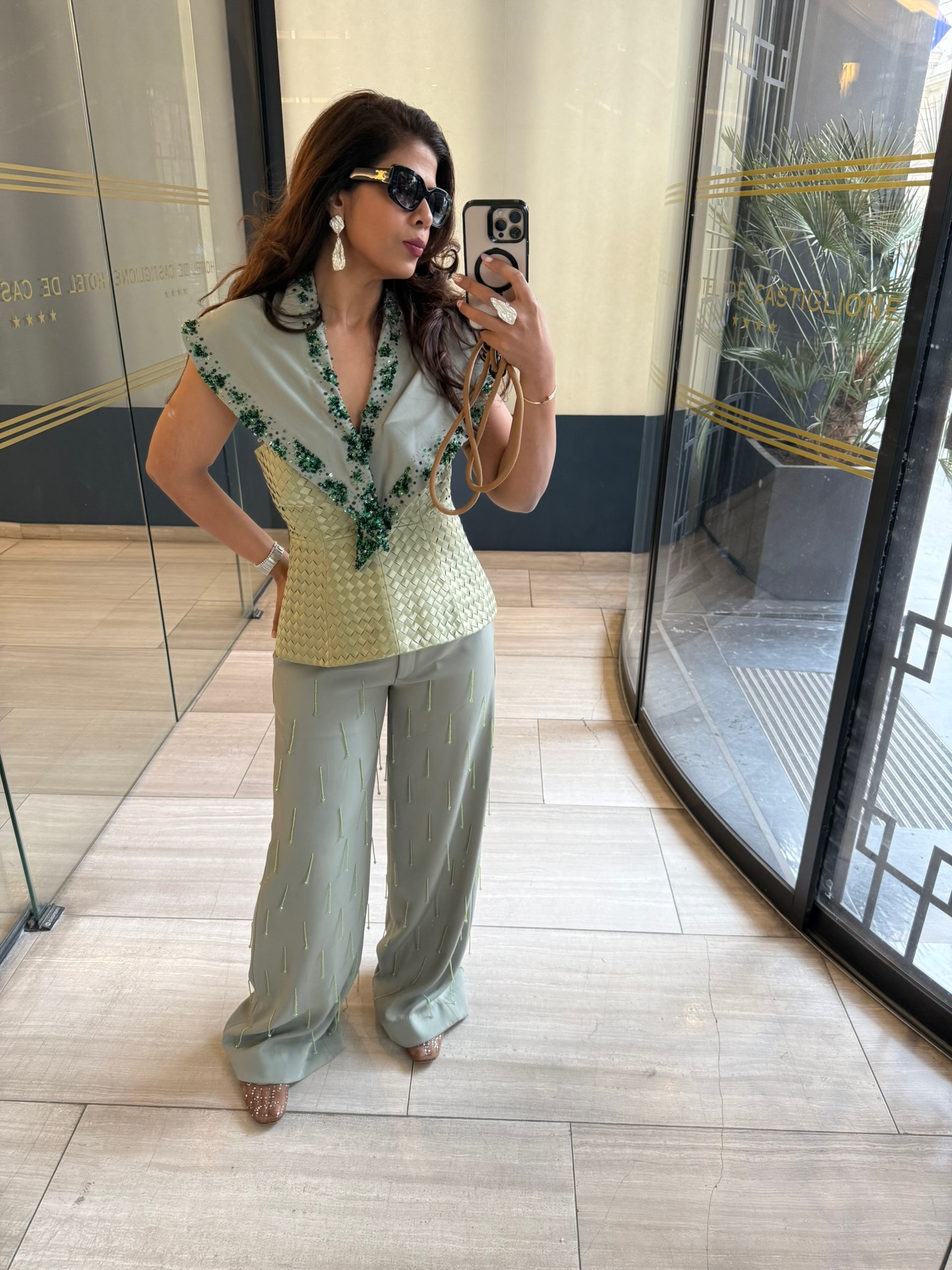
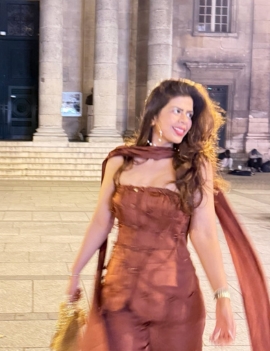
Over at Vaillant, inside the Opéra Bastille, movement met memory. Alice Vaillant's "Le Récital" felt like watching dance translated into fabric - sheer layering, silk bodysuits, corseted tulle skirts, and sculptural draping that mirrored her own ballet past. It was about vulnerability and strength, delicacy and defiance - themes that deeply resonate with Indian femininity. Our design stories too often emerge from that same place: where tradition softens strength, and strength holds space for beauty. I wore a Woven Whisper Corset + scarf + Mistborne Trouser from Siddhant Agarwal, styled with a pair of Oak Dangler Earrings from Studio Kassa and a Raffia Bucket Bag from JENA.
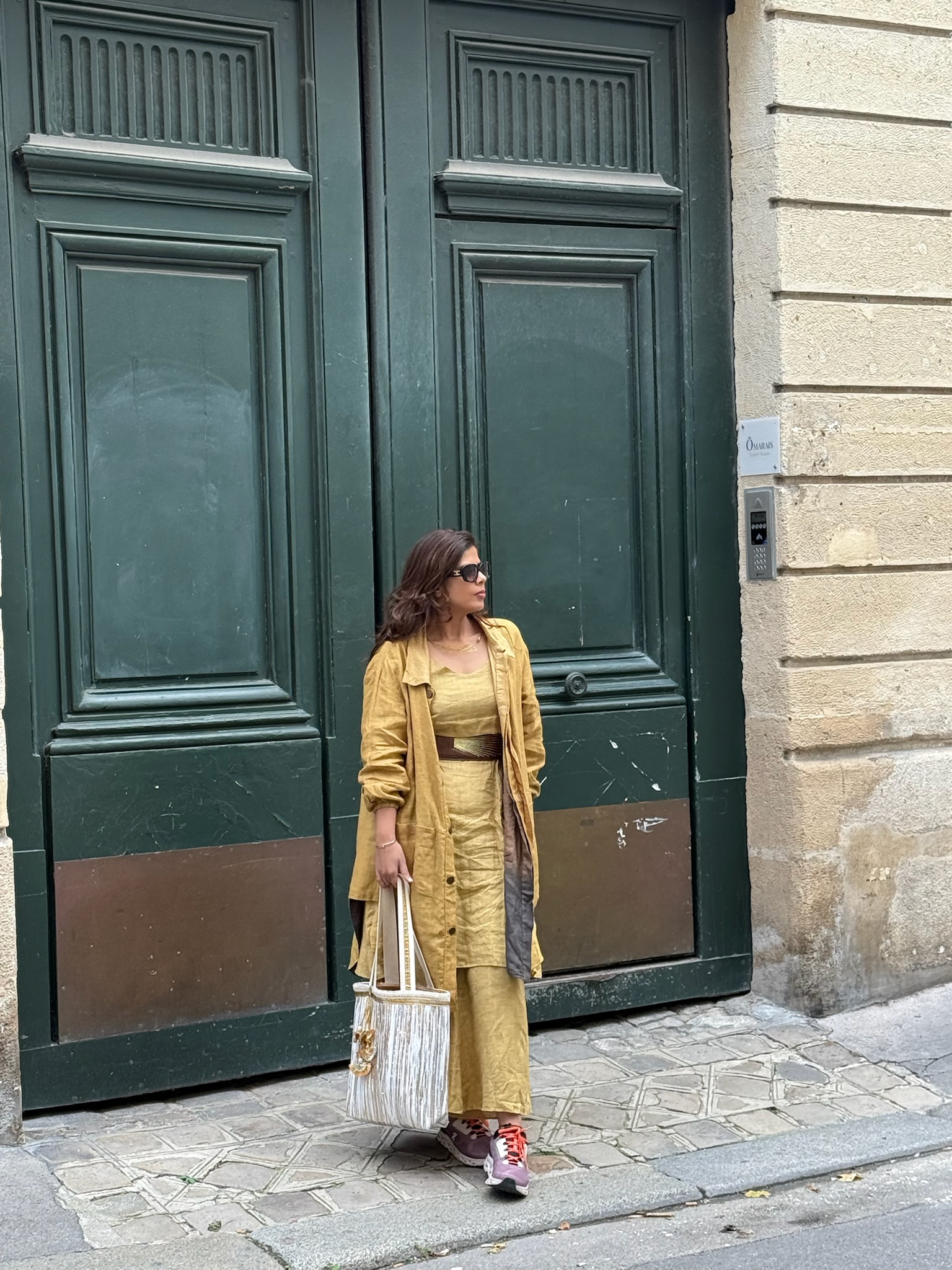
Junko Shimada's show was pure joy - an ode to stripes, color, and individuality. The collection's bright palette and relaxed silhouettes brought a sense of freedom and optimism that fashion sometimes forgets. It was a reminder that true elegance is effortlessness - something that Indian textiles have long mastered. A handwoven ikat or a breezy khadi co-ord can feel just as "Parisian chic" when styled with intention. It is the very reason why I wore a trench and My Fav Set from Paeony, paired with an upcycled Urumi Waistbelt and Edith Neckpiece choker from Econock and an upcycled bag from Shraddha Charitable Trust - a non-profit working towards uplifting the lives of autistic individuals.
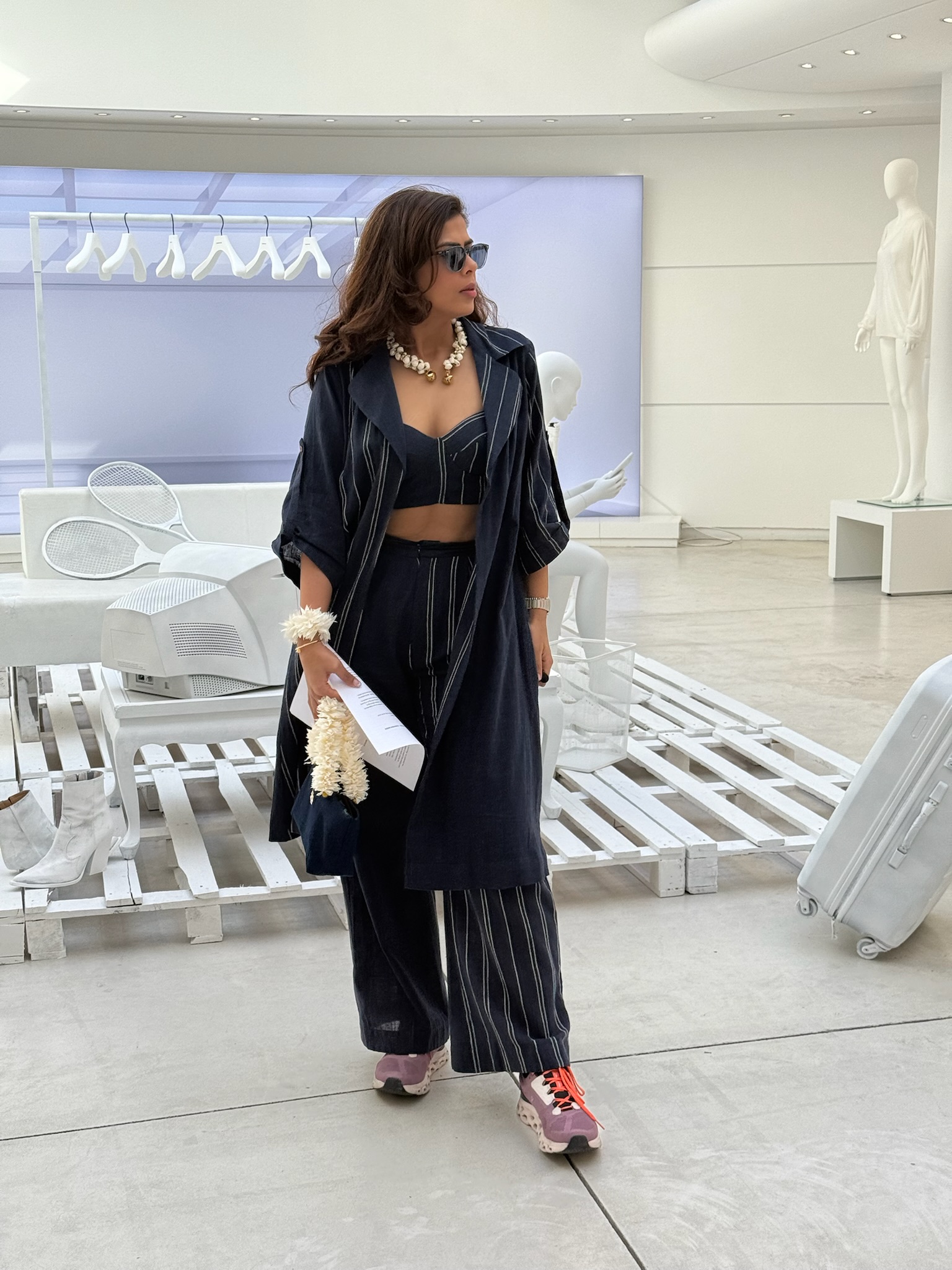
And then, Barbara Bui. Her SS26 show was a lesson in timeless power dressing - structured jackets, resin-coated denim, bootcut trousers, and that unmissable rock-chic energy. What struck me most was her idea of "evolution, not revolution." It's the same quiet philosophy behind The Chic Indian: to evolve how we see Indian design, not through reinvention, but through recontextualisation. I wore a Cobalt Bralette + trench + flared trouser from Join Alternative, styled with a jasmine cocktail napkin ring, a gajra scrunchie and a denim-gajra bag from Shraddha Charitable Trust.
So here's my take, from one fashion lover to another: When you travel, take your India with you. Whether it's a handwoven sari at a Paris show, a structured Mumbai co-ord in Milan, or a Delhi-made statement upcycled bag at a New York dinner - wear your homegrown with pride. Because style isn't about blending in; it's about standing rooted, no matter where you stand. And trust me - the world notices.
When I packed for Paris Fashion Week Spring/Summer 2026, I didn't reach for the glossy, global, seen-on-the-runway names. Instead, I packed stories. Pieces stitched in Mumbai, woven in Calcutta and Surat, dreamed up in Delhi - each one by an Indian designer shaping a new language of luxury: confident, rooted, and unapologetically homegrown.
Because for me, attending Paris Fashion Week isn't just about witnessing the world's best fashion; it's about carrying a piece of India to those front rows.
As I walked into shows like Maitrepierre, Wildrose & Sparrow, Vaillant, Junko Shimada, and Barbara Bui, surrounded by editors, buyers, and creators from every corner of the globe, I realised something: wearing Indian design abroad isn't just a personal choice. It's a statement. It says - we belong here.
For too long, the world has borrowed our textiles, our silhouettes, our craftsmanship - while we quietly admired from afar. But today, when I wear homegrown labels at a global fashion week, I'm not just wearing a look. I'm reclaiming a narrative.
At Maitrepierre, designer Alphonse Maitrepierre presented "En plein cœur" at the Musée des Arts Décoratifs - a poetic homage to Paul Poiret who was known for his voice in opulence. The collection's balance of vintage volume and modern technique - with 3D embroidery, laser-cut embellishments, and a commitment to sustainability - mirrored something deeply familiar: India's own ability to weave the ancient and avant-garde into a single garment. There's a quiet kinship between their reuse of deadstock materials and our revival of craft traditions. Both are acts of remembering and reimagining. I wore a Coral fade Blazer from Siddhant Agarwal with an Italian vintage purse, paired with Maje cascading earrings and an Oak Silver Ring from Studio Kassa.
Wildrose & Sparrow's "Ex Libris", staged inside the historic Bibliothèque Mazarine, unfolded like a literary dream, from gothic romance to Edwardian lightness. Each chapter felt handcrafted, deliberate, poetic. It reminded me of India's slow fashion ateliers, where every stitch carries a story and emotion outweighs excess. In a world obsessed with minimalism, their maximalist poetry felt refreshingly honest, much like the way our own artisans approach ornamentation not as decoration, but as devotion. I wore a Bloom Kaftan dress from Amka styled with a vintage grandfather watch (worn as a necklace), paired with vintage earrings from London and a Raffia Bucket Bag from JENA.
Over at Vaillant, inside the Opéra Bastille, movement met memory. Alice Vaillant's "Le Récital" felt like watching dance translated into fabric - sheer layering, silk bodysuits, corseted tulle skirts, and sculptural draping that mirrored her own ballet past. It was about vulnerability and strength, delicacy and defiance - themes that deeply resonate with Indian femininity. Our design stories too often emerge from that same place: where tradition softens strength, and strength holds space for beauty. I wore a Woven Whisper Corset + scarf + Mistborne Trouser from Siddhant Agarwal, styled with a pair of Oak Dangler Earrings from Studio Kassa and a Raffia Bucket Bag from JENA.
Junko Shimada's show was pure joy - an ode to stripes, color, and individuality. The collection's bright palette and relaxed silhouettes brought a sense of freedom and optimism that fashion sometimes forgets. It was a reminder that true elegance is effortlessness - something that Indian textiles have long mastered. A handwoven ikat or a breezy khadi co-ord can feel just as "Parisian chic" when styled with intention. It is the very reason why I wore a trench and My Fav Set from Paeony, paired with an upcycled Urumi Waistbelt and Edith Neckpiece choker from Econock and an upcycled bag from Shraddha Charitable Trust - a non-profit working towards uplifting the lives of autistic individuals.
And then, Barbara Bui. Her SS26 show was a lesson in timeless power dressing - structured jackets, resin-coated denim, bootcut trousers, and that unmissable rock-chic energy. What struck me most was her idea of "evolution, not revolution." It's the same quiet philosophy behind The Chic Indian: to evolve how we see Indian design, not through reinvention, but through recontextualisation. I wore a Cobalt Bralette + trench + flared trouser from Join Alternative, styled with a jasmine cocktail napkin ring, a gajra scrunchie and a denim-gajra bag from Shraddha Charitable Trust.
So here's my take, from one fashion lover to another: When you travel, take your India with you. Whether it's a handwoven sari at a Paris show, a structured Mumbai co-ord in Milan, or a Delhi-made statement upcycled bag at a New York dinner - wear your homegrown with pride. Because style isn't about blending in; it's about standing rooted, no matter where you stand. And trust me - the world notices.
Unlock our reward based ACCESS PRICE system that creates enduring value for chic members and labels.
Just by signing up, you get upto 20% off on every purchase, across the site, at all times - spot the Access Price next to MRP on every product.
Access other perks from collaborations, styling services and more.
Unlock our reward based ACCESS PRICE system.
Get upto 20% off on every purchase - spot the Access Price next to MRP.
.png?v=1776005942)

.png?v=1776005942)


